Archive | France Culture RSS feed for this section

Agnes’ Alsacien Rhubarb & Almond Tart / Tarte à la Rhubarbe à l’Alsacienne

22 May

French Rhubarb tart

Recently I took a weekend trip to Strasbourg- the capital city of Alsace situated on France’s East bordering Germany and only 2.5 hours out of Paris on the high-speed train.

To me, Alsace is a perfect example of France’s great regional diversity. Arriving in this region really gives you the impression of crossing borders: the architecture, local gastronomy, culture, climate and even language are so uniquely, strikingly Alsacien. Hosted by the lovely Agnès and friends, my weekend getaway just outside the capital of Strasbourg turned out to be both a cultural and gastronomic delight. If I had to put my Alsacien culinary impressions into three words I would call it the “Land of choucroute, pork, and pastry”– and lots of it!

Alsacien cuisine, strongly based on Germanic culinary traditions, is marked by the use of pork in various forms. Additionally, the gastronomic symbol of this region is undoubtedly “Sauerkraut”- or in French “Choucroute”. That is, slow cooked white cabbage. And this is one thing I have really grown to love. On this trip I must say I had one of my all-time most memorable meals. After luckily scoring a table at the famous “Maison Kammerzel” perfectly positioned to bask in the midday sun at Place de la Cathedral whilst dining to the sound of street musicians and church bells, I ate my first Choucroute aux trois poissons – un vrai plaisir! How they turn the humble cabbage into something as savoureuse and mouth-watering as this, seasoned with the delicate flavours of juniper berries and cumin and finished off with a light lemony butter sauce…I will sadly never know, since the famous recipe form this restaurant recipe is one of the region’s best-kept secrets.

Anyway, aside from eating of course, my most treasured travel experiences are undoubtedly those that involve cooking with locals. On this particular trip, I was shown first hand how to prepare three typically Alsacien dishes:

Firstly, a lesson in the famous dish ‘Baeckeoffe’ (a hard-core, heavy, meat and potato dish designed for the thick of freezing winter).

Secondly, since white Asparagus is also in season right now and the local produce was of impressively quality, our neighbour showed me the traditional blanching method in boiled water with salt and sugar, served at room temperature with a heavenly light mousseline mayonnaise in which she folded in whipped egg whites at the end. Divine.

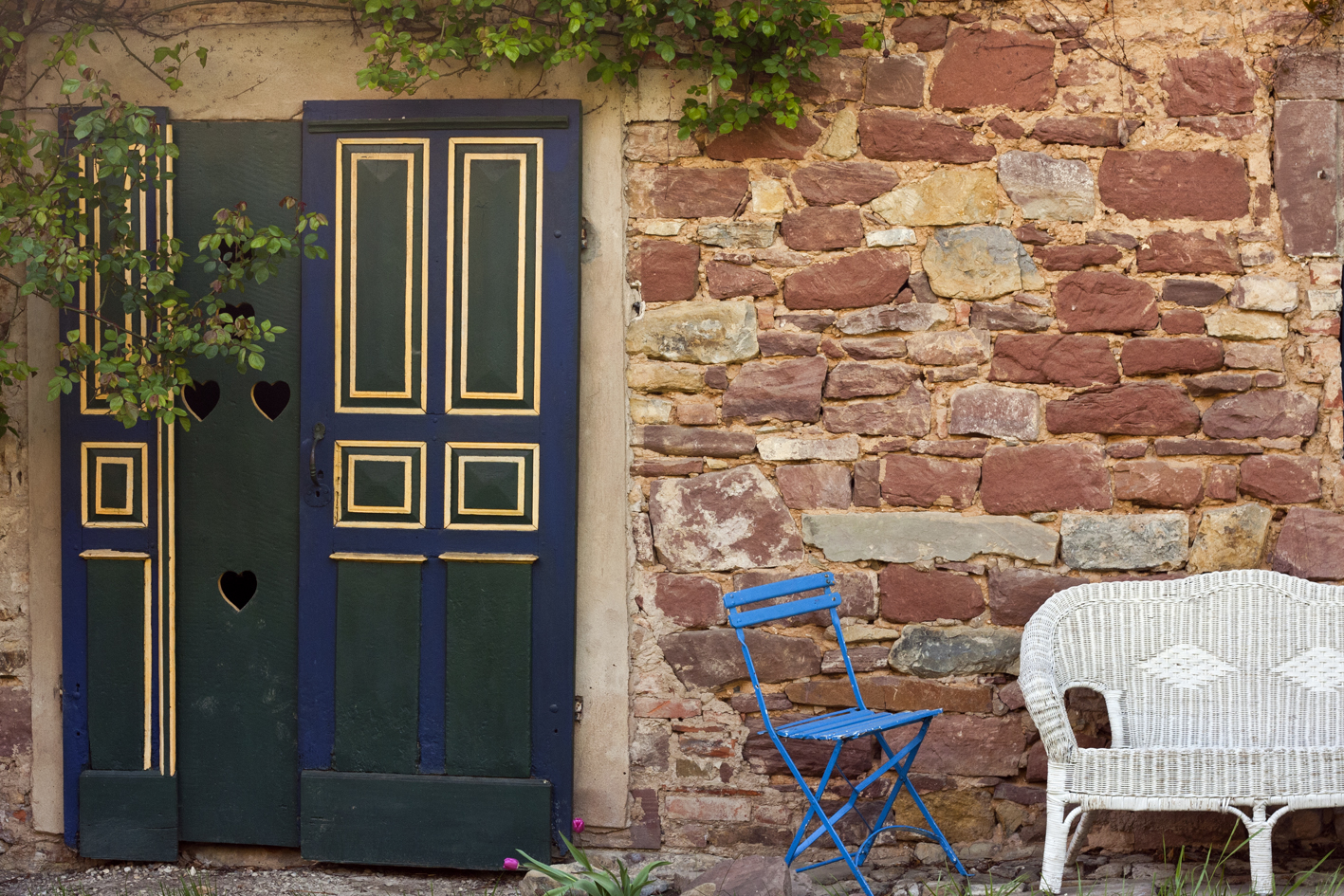
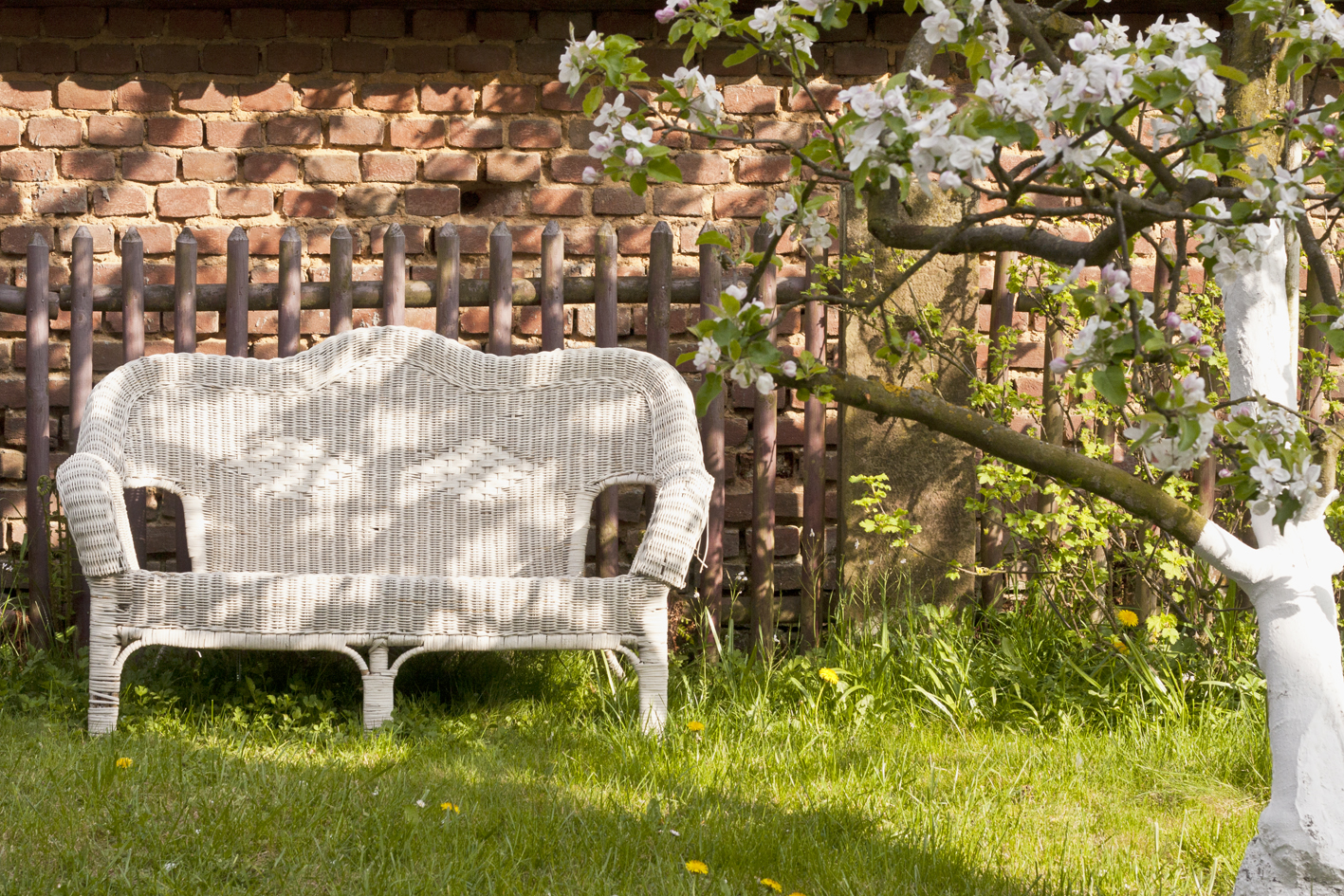
But of course the one thing you simply cannot beat is cooking with produce freshly picked right out of the garden. My lovely host Agnès is luckily enough to live in a stunning Alsacien home, tastefully and artfully renovated by her very own hands with gardens and surrounds so magical in their blossoming springtime beauty that this place practically teletransports you into a romanticised scene from a children’s fairy tale- right down to the original Alsacien stove restored to pristine condition in her kitchen.

Original Kitchen. I have serious kitchen envy

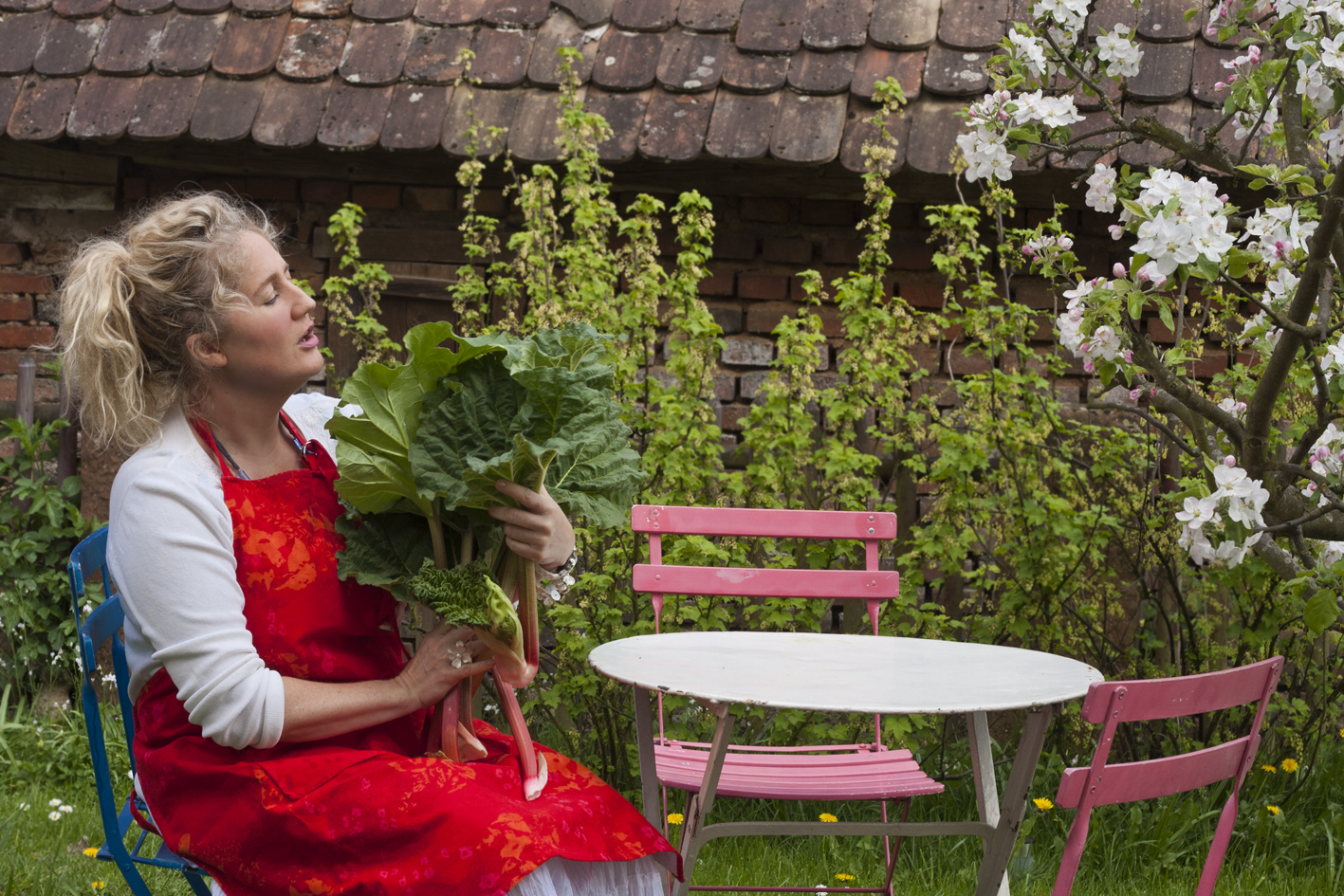
Agnès, an avid nature lover, keen gardener and passionate home cook had a real treat planned for me. My trip coincided perfectly with the first rhubarb of the season- growing in her garden directly beneath the kitchen window. And just to sweeten the story further, by Alsacien tradition- the first Rhubarb of the season gets baked into a pie. Now is this the stuff fairywonderland is made of or what?

picking rhubarb

Agnes and her home-grown rhubarb

Lucky me had the honour of sharing the baking (and eating) experience personally with Agnès who has, over numerous variations, now perfected her very own Tarte à la Rhubarb recipe. This delicious treat, I can confirm, perfectly balances the slightly tart character of the rhubarb with the sweetness and softness of the almond biscuit cream base with the delicately crumbly sweet butter pastry.

A note on Rhubarb: The French, for some reason all seem to peel their rhubarb, and their asparagus too for that matter. Personally, I don’t see the point since when you peel it you lose the gorgeous red colour by removing the skin, as well as a lot of the fibre and the nutrients in the outer layer. Additionally, if the rhubarb was also totally organic or grown in your garden then there are no pesticides nasties to worry about. I’ve also had this conversation with my local organic greengrocer at the markets who simply tells me “Il faut eplucher la rhubarb Madame” but when I ask why, I get the classic French response “it’s just what we do”. So… to peel or not to peel- it’s in the end up to you!

fresh rhubarb

Wine Matching: Some of the world’s greatest dessert wines come from Alsace. Try a Gewürztraminer, the perfect match for this tangy tart.

Thanks to Agnès for her hospitality, recipe sharing, and our sneak peak into her delightful fairy-wonderland home.

Recipe: Agnès’ Alsacian Tarte a la Rhubarbe

Ingredients:

• 1kg grams rhubarb, diced into small pieces or 10 cm pieces, arranged spirally
• 75 grams sweet butter shortbread biscuits- crumbled
• ½ cup almond meal
• 1 sheet shortbread pie pastry (pastry recipe here)
• 3 eggs
• 250 mls fresh cream
• 1 tbsp vanilla essence or I pod fresh vanilla seeds
• 150 grams icing sugar
• 3.5 tbsp caster sugar or raw sugar
• Slithered almonds- to serve

Directions:

• Preheat your oven at 200 degrees C/420 F.
• Peel (or simply rinse well and don’t peel) the rhubarb and cut into small pieces or 10 cm strips as desired.
• Place them in a colander placed over a bowl and sprinkle with the icing sugar. Leave it to rest for 1 hour, stirring and turning the rhubarb each 15 mins so that the rhubarb sweats out its water content.
• In the meantime, position the pastry into the base of the pie dish, leaving 2 cm’s of pastry overhanging to allow for shrinkage. If you have a conventional oven, you can very lightly blind bake your pastry base now however bear in mind that this tart does not need a lot of heat to cook through. (Agnès’ traditional oven did not need this and the pastry cooked right though without pre-baking).
• After very lightly blind baking or if not required, crush the shortbread biscuits into fine crumbs and combine the biscuit crumb with almond meal evenly in the base of the pastry
• In a separate bowl whisk well together the cream, vanilla and egg
• Once the rhubarb has lost a lot of it’s water, drain and remove from colander and place evenly or arrange longer strips spirally into the pastry tine, over the crumb base.
• Sprinkle remaining caster or raw sugar over the top
• Pour egg and cream mix over the rhubarb and sprinkle with slithered almonds
• Cook for about 20 minutes, taking care that the top does not burn or cook too quickly
• Remove from the oven. Allow to cool to room temperature and using a sharp knife, shave off excess pastry from the edges of the tin.

Serve with vanilla ice cream, fresh cream and/or Gewürztraminer wine.

A savourer!

rhubarb tart tarte a la rhubarb

C’est le Combawa! Haute Pâtisserie flavours with edible art by Hugo & Victor and Pierre Cuisine

22 Apr
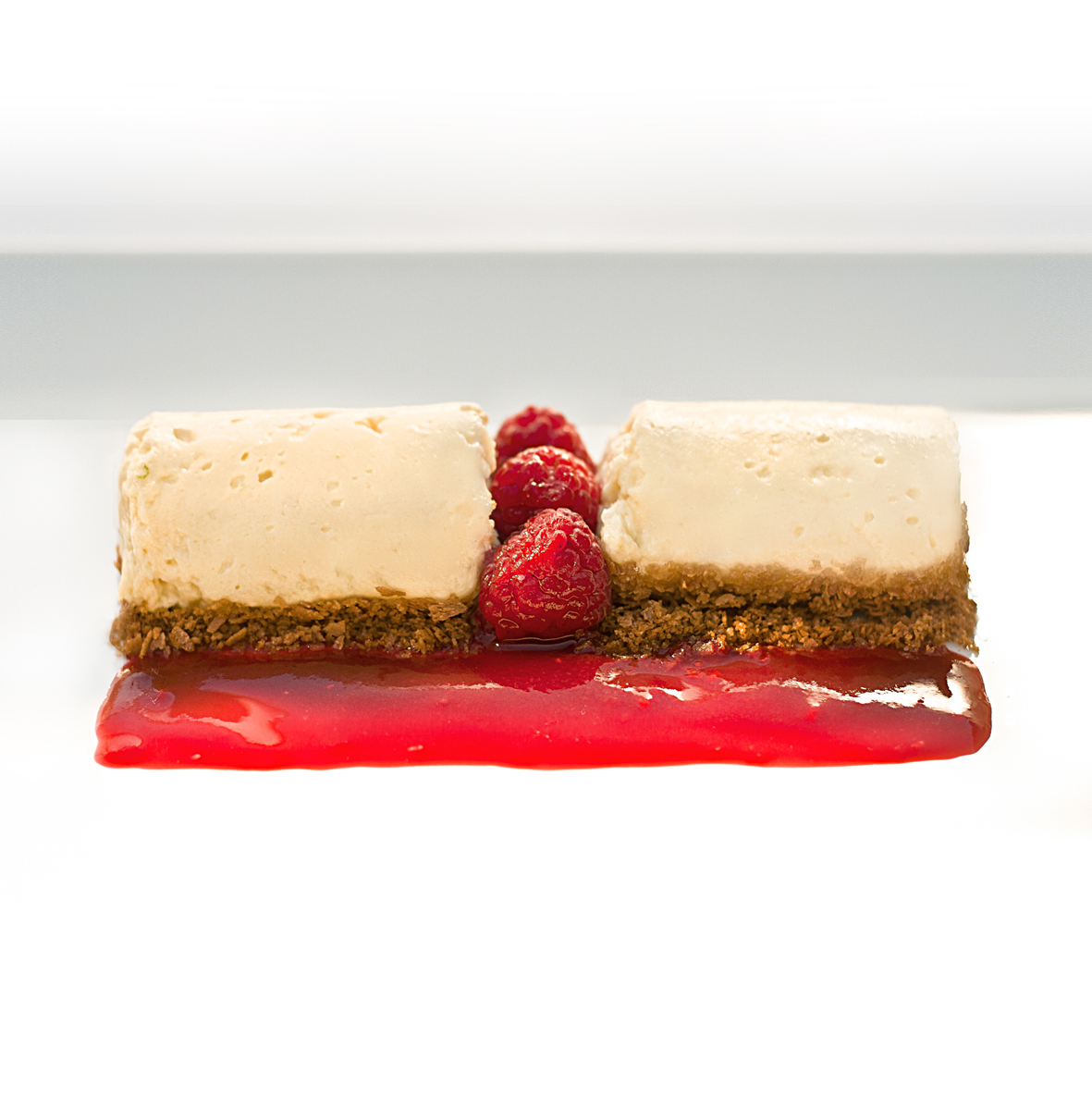
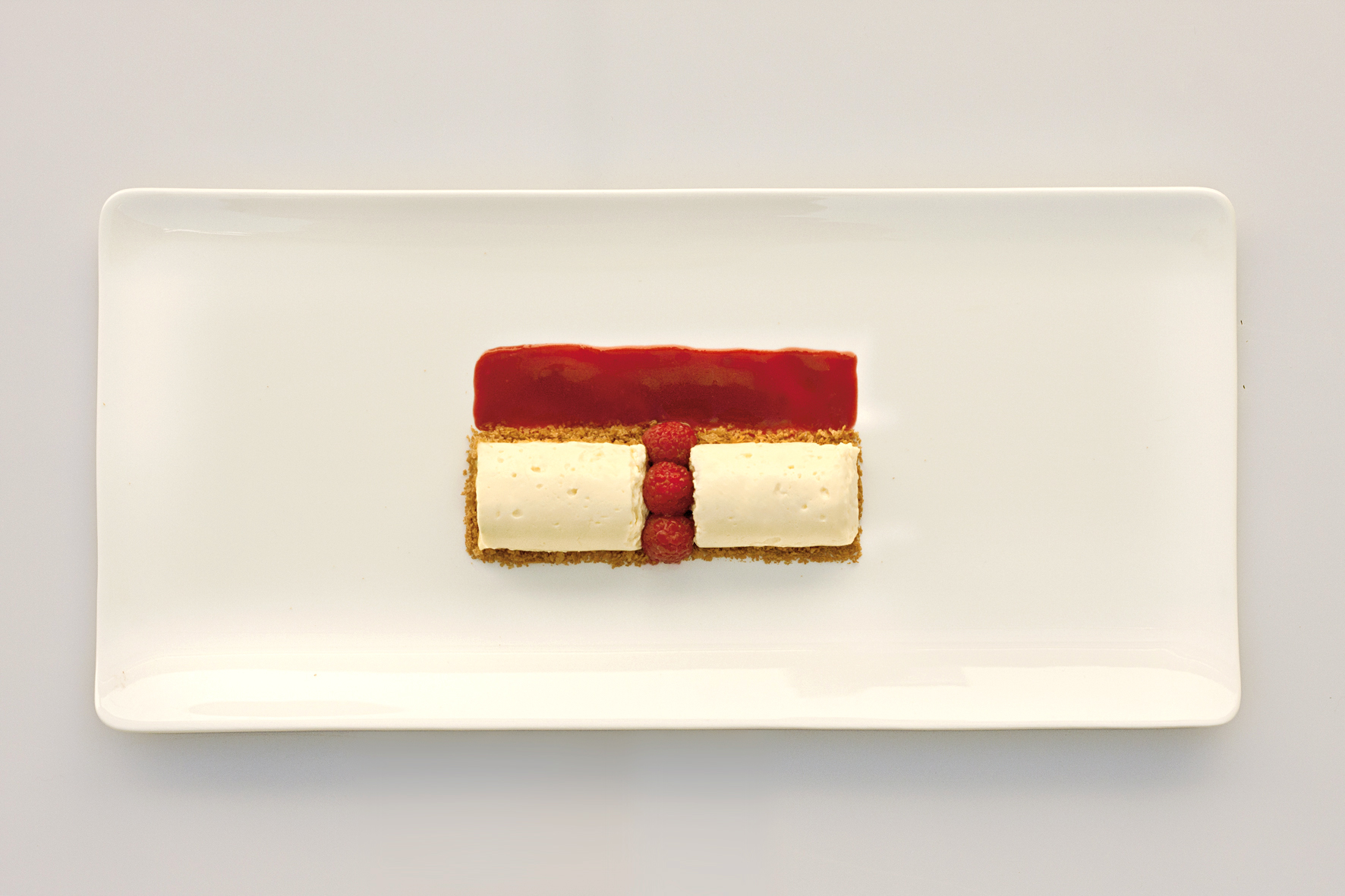
combawa mousse with raspberry balsamic coulis

Combawa (Kaffir Lime) Custard Mousse, Crêpe Dentelle and Raspberry Balsamic Coulis.
Recipe by Pierre Cusine, styling and photography by Rachel Bajada

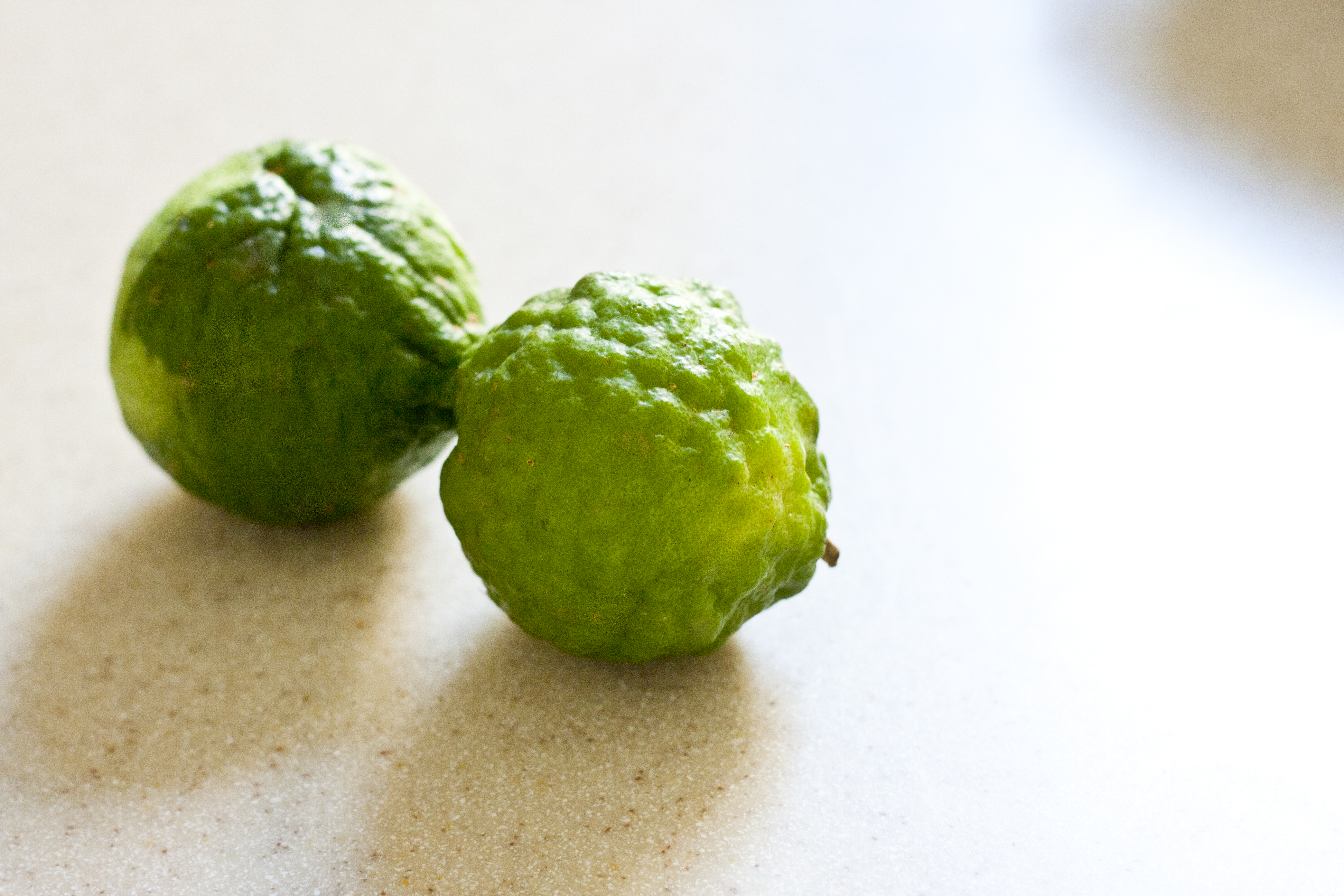
Ah le Combawa. How it happens that we only just found each other, I just don’t know, but this exotic ingredient known in English as “Kaffir Lime”- is becoming the star of the show in French patisserie from gourmet desserts to chocolates and macarons.

This is one of the things I just love about modern French gastronomy- the flavour pairings are exotic and surprising. Take an Asian lemon-grassy lime citrus, the fruit of which is often disregarded for being overpowering and acidic, then masterfully match the aromatic qualities of it’s zest with the delicate flair of French patisserie and what do you get? A delicious… love child. A really good-looking… Eurasian one.

I first really discovered the combawa when I recently had the fortune of meeting and interviewing Mr Hughes Pouget – a visionary and talented award winning pâtissier and co-founder of Hugo et Victor, Paris Haute Patisserie concept stores take gourmet patisserie and l’art du chocolat to a whole new level.

When walking into the gorgeous Hugo et Victor store on Paris Rive Gauche, I could only explain the sensory experience as something in-between the excitement of diamond shopping in a high street jeweller, and the gastronomic indulgence of the dessert degustation in a Michelin star restaurant. Need I say no more. The creations by Hugo et Victor strike a perfectly balanced chord between art, fashion and food. In describing the concept, Hughes Pouget himself explains:

“There is something beautiful and fabulous in this ‘universe’… I wanted to create something in-between a pastry shop and a restaurant so that customers have the freedom of choice… so we follow the seasons and the markets- for example we replace the tangerine with the blood orange and during winter we have the Combawa… essentially we created a ‘menu’.“

Hugo et Victors ‘Seasons’ concept is a real hit and it makes so much sense. They alternate their best-seller classics with seasonally introduced flavours across a palette of delicacies from chocolate through to patisserie and even give wine matching recommendations to complete your experience. And as for the Combawa, Hugo et victor now have their own private plantation on the French Riviera to ensure a stable, non-imported, and top quality supply of this exotic fruit normally only gown in the southeast again region.

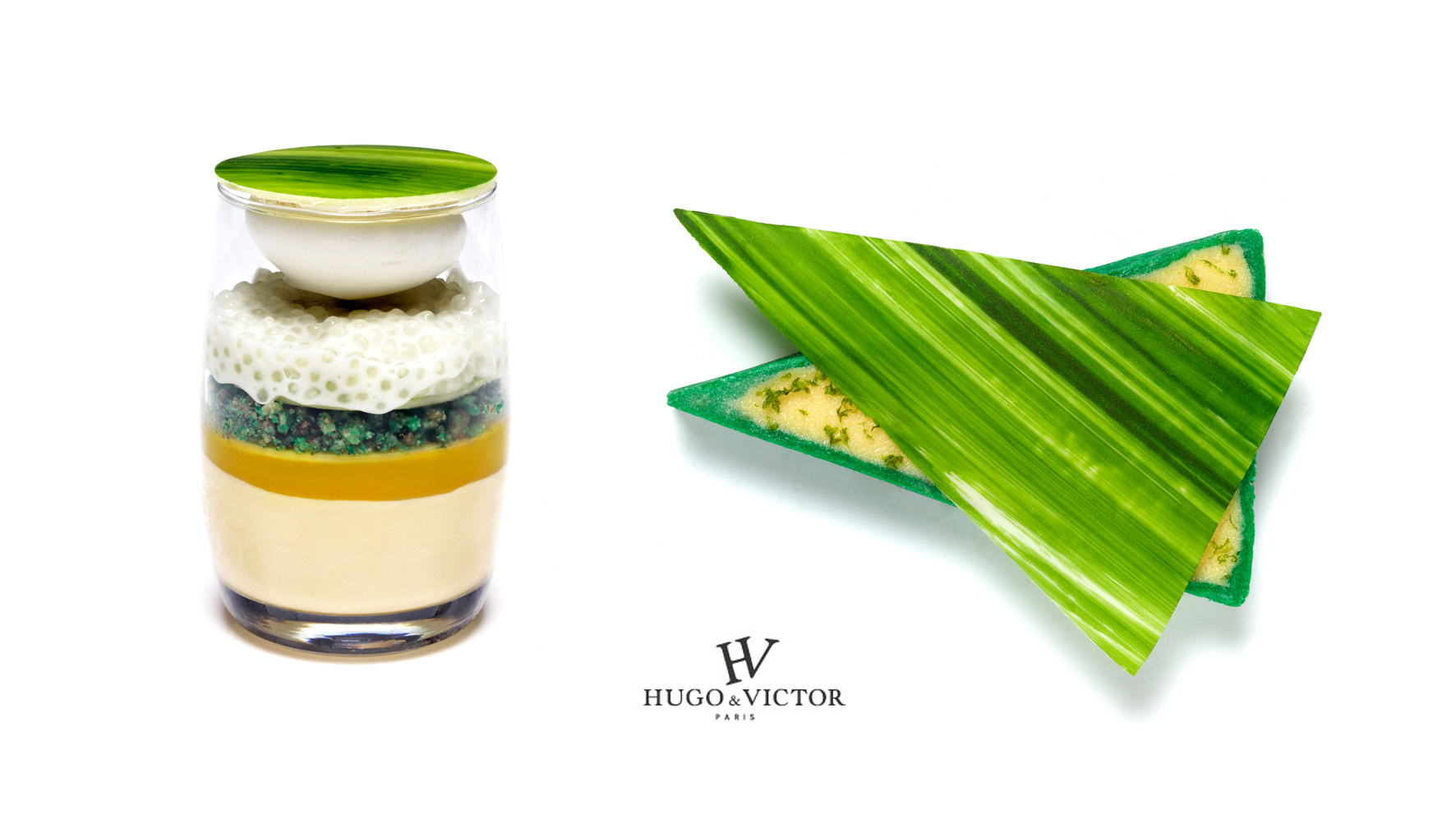
Hugo et Victor Combawa desserts

Image Supplied. The Combawa Verinne and Combawa Tarte by Hugo et Victor, Paris.
Put it on your 'Must eat when in Paris' list

For those visiting Paris, The Hugo et Victor Combawa tarte and Combawa Verrine (pictured above) should go immediately on the ‘must eat’ list. When I asked Hughes Pouget where he gets his flavour pairing inspiration from, he explained that in his time travelling all corners of the world, he picked up many ideas applicable to patisserie which often resurface years down the track .

“For two years I travelled all over the word… between Singapore, Shanghai, Tokyo, brazil so the inspiration is my travels- as in life, in my work, it’s important to be very curious”.

And so, inspired by this delicious discovery I set out to recreate something delicious that we can all create ourselves, starring this exotic ingredient.

Now, of course I love desserts, but creating something sophisticated and refined that would do justice to this ingredient seemed best left to the experts. So I decided to enlist the help of a much more talented cook than myself. Who better to collaborate with than the illustrious Pierre Cuisine!

A well known and very popular French food blogger famous for his ambitious creativity and original culinary creations, (not to mention his well-maintained incognito status), Pierre’s recipes are an interesting contrast to his day job in finance where I imagine his unsuspecting colleagues have no idea what he is capable of in the kitchen after hours!

Like many food bloggers, Pierre has no official culinary training, but his imagination, passion for food and many years of experimentation in the kitchen result in some absolutely superb and inspired dishes…
Artichoke pannacotta with almonds, pistachio and pinenuts; Calamari surf and turf with Basque Jambon and spicy broth; Cashew cheesecake with coriander-candied lemon cream and pink radish; Chestnut cream and foie gras amuse bouche… the list of deliciousness goes on!

You can see all of Pierre’s creations here but in the meantime- here is a little video to warm you up to the recipe for our very own combawa creation:

Combawa Custard Mousse on a base of Crêpe Dentelle with Raspberry Balsamic Coulis.

The recipe which can be found in English and French further down the page.

Combawa custard mousse with raspberry coulis

Combawa (Kaffir Lime) Custard Mousse, Crêpe Dentelle and Raspberry Balsamic Coulis by Pierre Cuisine. Image © Rachel Bajada

Recipe: Combawa (Kaffir Lime) Custard Mousse, Crêpe Dentelle and Raspberry Balsamic Coulis by Pierre Cuisine

Serves 4

The Combawa Custard Mousse
• 1 Combawa (Kaffir Lime) zest
• 2 eggs
• 2 large tbsp of mascarpone
• 2 sheets of gelatin
• 2 tbsp caster sugar

Whisk egg yolks with sugar to a creamy white consistency; add the mascarpone and whisk again until the mixture is silky and smooth. Finely grate the zest of the kaffir lime using a micro-zester and mix again to combine.
Beat the egg whites until they form stiff peaks (with a tiny pinch of salt) .
Carefully fold the egg whites into the combawa and egg yolk mixture.

Prepare and fill a pastry bag with the combawa custard and leave to rest in the fridge for approx 30 mins, allowing the gelatin to thicken the cream.

To form the combawa mousse ‘logs’, Pierre creates plastic tubes using clear plastic projection sheets rolled into narrow cylinders and sealed with cello-tape.

After 30 minutes remove the piping bag from the refrigerator and gently pipe the combawa cream into the individual tubes. Seal the tube ends with cling film and return the tubes to the fridge to finish setting. If you are pressed for time, you can place the tubes in the freezer to set quickly.

Crêpe Dentelle Base

• 1 packet of Crêpes Dentelles

Place the crepe dentelles (or a substitute sweet caramel-like wafer biscuit) in a sealable zip-lock bag and roll over the bag with a rolling pinner until they are crushed into crumbs.

Raspberry Balsamic Coulis

• Approx 20 raspberries for 4 people, plus 3 fresh berries per serving
• 2 tbsp of balsamic vinegar
• 2 tbsp icing sugar

Place the raspberries, vinegar and sugar in a saucepan and cook on low heat for approximately 5 minutes. Remove from heat and strain the coulis through a fine sieve of tea strainer to remove seeds. Set aside and allow the coulis to cool. Once cooled, pour into a plastic-nozzled sauce dispenser and place in fridge for 10 minutes before serving.

On the plate carefully arrange a rectangular strip of the crushed crepe dentelle to form the base .
Gently release the seals on the plastic cylindrical molds and slowly ‘roll out’ the combawa mousse log, placing it on top of the crushed crepe base .
Add the fresh raspberries and draw a line of raspberry coulis lengthways.

Serve at a cool temperature.
Enjoy!

Combawas/Kaffir Lime

Combawas/Kaffir Lime

step by step: how to make combawa mousse

Step by step- how to make the combawa custard mousse and raspberry balsamic coulis

Recette: Mousse de Combawa, Crepes Dentelles et Balsamique de Framboises

Pour 4 personnes
Ingrédients:

Pour la mousse au combawa
• 1 combawa
• 2 œufs
• 2 cuillères à soupe de mascarpone
• 2 feuilles de gélatine
• 2 cuillères à soupe de sucre

Battez les jaunes avec le sucre jusqu’à ce qu’ils soient blanchis, ajouter la mascarpone et fouetter pour bien mélanger. Râper les zestes de combawas et mélanger à nouveau. Battez les blancs d’oeufs avec une pincee de sel pour obtenir une consistence.
Bien battre le mélange au fouet, et incorporer délicatement les blancs d’oeufs battus avec la crème combawa.

Remplissez la creme dans une poche à douille et mettez le contenu au lréfrigérateur pour une durée de 30min (le temps que la crème prenne un peu).

Faites des tubes avec du rhodoïd ou des feuilles en plastiques de rétro projecteurs. Fermez les tubes d’un cote avec un ruban a adhésif et de l’autre cote avec du film transparent.

Après 30 minutes vérifiez si la crème a commencé à se solidifier.
Commencer à remplir les tubes de crème. Fermez les bouts des tubes avec du film transparent ; et puis consolider avec du ruban a adhésif. placez le contenu dans le réfrigérateur jusqu’à ce que le désert soit servi.

Les crêpes dentelles

1 paquet de 2 crêpes dentelles

Ecraser les crêpes dentelles (ou tout autre biscuit) dans un sac de congélation avec un rouleau à pâtisserie jusqu’à obtenir une poudre.

Le coulis de framboises au balsamique

• Environ 20 framboises (3 ou plus pour chaque personne)
• 2 cuillères à soupe de vinaigre balsamique
• 2 cuillères à soupe de sucre glace

Dans une casserole, mélanger les framboises avec le vinaigre et le sucre.
Cuire le mélange à feu doux jusqu’à ce que les framboises soient cuites (environ 5 minutes).
Passez le coulis de framboises au chinois pour se débarrasser des graines.
Laissez le coulis se refoidir..

Sur l’assiette de service poser délicatement la poudre de crêpes dentelles en forme rectangulaire.
Démoulez la mousse combawa et placez-la sur les miettes de dentelles.
Ajoutez les framboises fraîches tout en dessinant une ligne de coulis.
Servir frais.

The Taste of Spring: Crisp Asparagus and Sweet Pea Salad with Poached Egg and Fresh Goats Curd

26 Mar
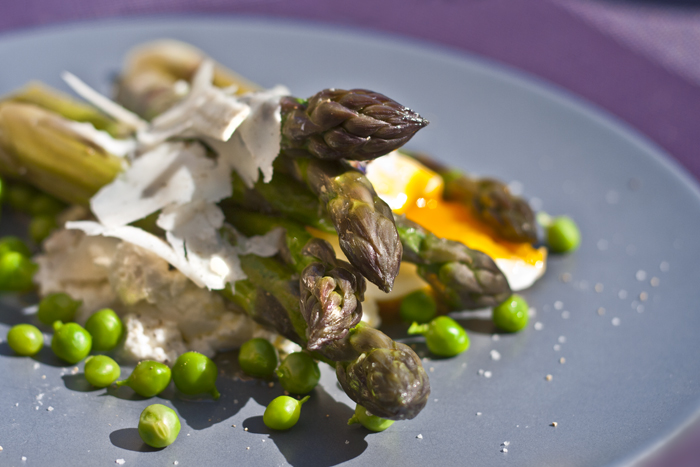
Spring Asparagus, Fresh Goats Curd & Poached Egg Salad

Crisp Asparagus and Sweet Pea Salad with Poached Egg and Fresh Goats Curd

This morning I woke up and thought: “I’m going to walk to the markets, buy whatever is in season, fresh, and locally grown- and just make something delicious.” And that’s what I love about France. Whether you’re in Paris, or a tiny regional village somewhere, the local growers markets will always be there to supply the best quality produce- and most importantly- it’s LOCAL, and IN SEASON, meaning you’re supporting local farmers and businesses, with the knowledge that your produce is ultra fresh and didn’t travel half way across the continent before you bought it.

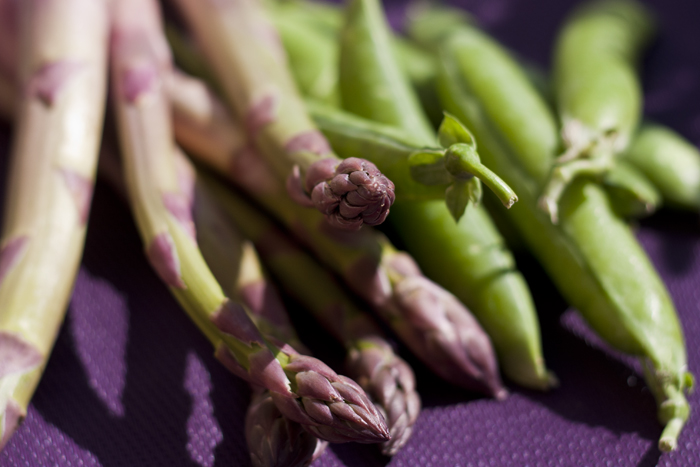
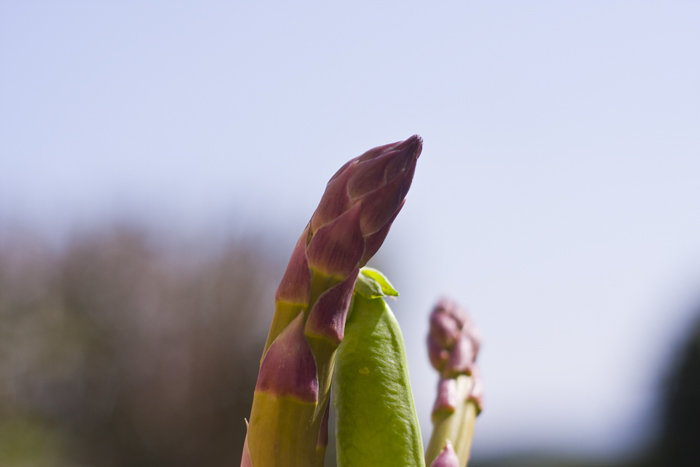
A sure sign of spring, the markets right now display a stunning array of all things bright and green. These impressive, plump, deep purple and green asparagus spears instantly called my name. Sitting right next to a basket of fresh sweet peas in their pods, with the local vendor positioned right opposite the stand of my favourite cheese man- it was an instant match made in heaven. With the best produce, freshest ingredients and dash of inspiration, you simply can’t go wrong.

Farmers Market Violet Asparagus

The fresh asparagus was calling my name

Mr Gouiran et son chevre

15th Generation local cheesemaker Mr Gouiran and his Goats milk cheeses

The process of preparing my yummy lunch today made me realise how much cooking is actually like a short love affair – in this case mine was no more than a spring fling: It starts with the usual chemistry of checking each other out at the market, them being impressed enough with what you find to take it home, admiring your new possession, photographing it to capture it’s beauty, imagining all the wonderful things you’re going to do to it, carefully preparing for the big moment, making sure all is well placed, aesthetically balanced, and then savouring every last moment of your time together…

Of course that’s the romanticised version- but since I’m in France, I figure I’m allowed. Hmmm… does that mean those who are handy in the kitchen make better lovers? Now there’s a debate of it’s own! Drop your comments in the box at the end of this post, I’m keen to hear what my readers have to say about this…

Asparagus and Peas

Violet Asparagus and Green Peas

Peas in a pod

Peas in a pod

Asparagus Spears

Is it just me or ate these peas and asparagus are gettin' it on?

Fresh Brousse de Chevre

The Real Deal: Fresh, local goats milk artisinal Brousse cheese

Artisinal Fresh French Goats Cheese

Market-fresh chevre au poivre by 15th generation artisinal cheesemaker

Ok, that’s probably enough of the food porn… now here’s that recipe:

Recipe:

Crisp Asparagus and Sweet Pea Salad with Poached Egg and Fresh Goats Curd

Ingredients:

Serves 2:
1 dozen fresh asparagus spears
250 grams fresh goats curd cheese (or similar depending on availability)
2 handfulls de-podded sweet peas
Extra virgin olive oil
Fleur de sel
Fresh cracked black pepper
2 free range eggs

To serve:
Fine shavings of Italian Cacioricotta cheese

Directions:

Cut asparagus spears at approximately 4/5th of their length on a 45 degree angle- if you bend the spear, the place where it snaps is where you should but it. Discard fibrous ends.

De-pod sweet peas and discard outer pods. Prepare two pots with boiling water. In one pot add salt and quickly blanch the asparagus and peas until just cooked and crisp. Remove and drain immediately. In the other, poach 2 eggs till medium-runny in boiling water with white vinegar.

Return asparagus spears to pan and coat lightly in olive oil with a pinch of fleur de sel.

Arrange fresh goats cheese and poached egg in centre of plate. Place peas around them and individually place asparagus spears on top.

To serve: add fine shavings of Cacioricotta cheese, fleur de sel and cracked black pepper over the asparagus.

Serve with a crisp white wine.

How I became an international French cheese smuggler

13 Mar

Now here is a very funny real life foodie adventure story.

We’ve all been there. Stranded at customs or airport security begging the security agent to let you though with you your so-called ‘prohibited or dangerous’ goods- usually an expensive hand cream, alcohol, perfume or gourmet gift that you put in your hand luggage, not knowing of, or forgetting the crazy cabin baggage policies of today. Bring back memories? I bet it does. I’m still laughing to myself about the journey I went through with my precious French cheeses went last night when taking a short EU flight between Marseille and Malta, and since it’s quite a laugh, I just had to share it.

– Printed board pass and passport in handbag? Check

– 15 kilos suitcase pre-paid check in luggage. Check

– Bag of edible goodies and gifts for expat friends ? (Check-in bag already at 15kg so will have to go in hand-luggage). Check

– Hand cream, lip gloss, nail polish and hairspray: All under 100 mls and sealed in plastic zip-lock bag? Check

And so, there I was. Bag checked in and ready to go through security to board my flight.

It started with the usual procedure. Laptop out, boots off, jacket off, liquids separated and in plastic bag, handbag in tray and on the conveyor belt. I then pulled out my shopping bag of goodies intended as gifts for friends and family in Malta and put it in the tray.

I had spent a good 45 minutes in the local fromagerie yesterday deliberating over which of the finest, stinkiest French cheeses to take with me and bring delight to those eagerly awaiting at the other end for their foodie fix.

Aside from a top French sauccisson and a block of fine dark chocolate, I had 750 grams ‘quota’ to fill with cheese After much indecision, I ended up choosing three of my favourites, just imagining the look of pure delight as they were received by their cheese deprived recipients.

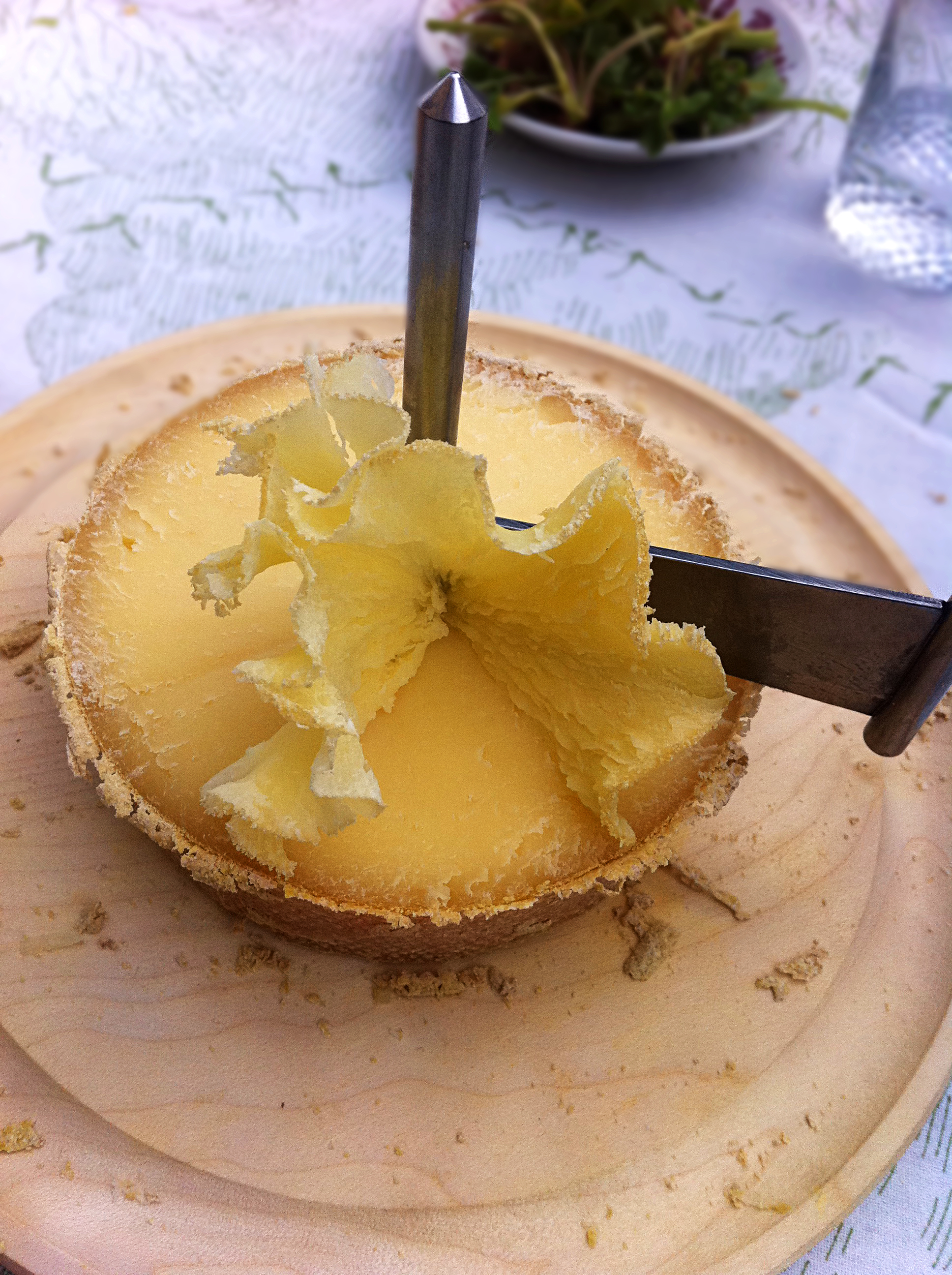
A 250 gram Tête de Moine (my new favourite). Usually served as an appetizer, it’s a firm cow’s milk cheese that’s loads of fun to serve using it’s special ‘shaving handle’ implement which shaves it into cute little ‘chanterelle-shaped morsels.

Tête de Moine cheese

Tête de Moine shaved into chanterelle morsels

An 350 gram round wooden box of divine Mont d’Or. For those of you not familiar with this cheese, all I can say is: this is the stuff dreams (and round hips) are made of. An unpasteurised ‘cru’ cows milk cheese which has an exquisitely creamy oozing centre and washed rind. The best way to eat Mont d’Or is heated in the oven in it’s own round wooden box, mixed with white wine till it’s an oozing and melting pot of liquid heaven.

Mont d'Or cheese

Mont d'Or: a melting pot of liquid heaven

And finally- I couldn’t go past 250 grams of the irresistible and classic Blue d’Auvergne. Another one of my personal favourites (especially with a walnut and endive salad) it was also a special request anxiously awaited by my friend Dennis at the other end.

Now… I got a little carried anyway there describing those cheeses- let’s get back to the story.

The dialogue from this point went a little something like this:

Security checkpoint officer woman: “What’s in the plastic bag?”

“Oh… just cheeses.”

“What type of cheeses? As some kinds of cheeses are not allowed”.

And then it occurred to me: Maybe you actually can’t take unpasteurized cheeses outside of France? So, knowing that 2 of the cheeses were ‘cru’ and one was not- I responded sheepishly with “Tête de Moine” (the pasteurised cheese). Hoping that would get me out of the red. After-all, the x-ray machine can’t tell the difference….right?

So, I proceed to go through the scanner gate. No beeps. All clear. I wait anxiously at the other end for my bag, laptop, jacket, shoes and- cheeses.

The woman at the other end opens the goodie bag and goes through it piece by piece.

Saucisson- fine. Chocolate- fine. Tete de moine- fine.

Just when I think it’s all good, she starts poking at the slab of blue cheese, shakes her head, and then puts it aside.

Then she picks up the round box of Mont d’Or…. and … puts it aside.

“Sorry- you can’t take these two cheeses- the other things are fine”

My panic begins to set in. Stay calm, don’t look stressed.

“But why? They don’t say that the milk is unpasteurised? And it’s the EU?!

She glares back at me, shaking her head and says:

“No no no it’s not that- that doesn’t matter. You are carrying too much LIQUID”.

Now I’m getting confused. I respond:

“You mean, it’s ok that the milk is unpasteurised, but I can’t take it because it’s a LIQUID?!”

She calls over Mr French Security Officer to further explain.

He lifts up the two offending cheeses and starts squeezing and poking them, shaking his head in dismay.

I respond “Mais… je ne comprends pas” C’est incroyable… This is not liquid- It’s CHEEEEEEEEEEEEEEESSSSSSE!!!”

“Yes, madame, but these cheeses are too soft so they are classified as liquid, and you can only take 100 mls of liquid on board.”

My jaw drops. I try to imagine possible ways of hijacking the plane armed with my Tête de Moine and Blue d’Auvergne. My imagination did not take me very far. Now I’m just annoyed at the sheer ridiculousness of the situation.

“But I HAVE to take the cheeses with me- they are important GIFTS!”

“I’m sorry, but that’s the rule. Can you put them in your check-in baggage or give them to a friend?”

“I have already checked in my bag, and there is no-one here who can take them from me.”

“Then, I’m sorry Madame, but there is no other option.”

Now my determination takes over. I respond, evidently flustered, in clumsy French:

“I cannot leave the country, and arrive empty-handed, without the cheeses- everyone waiting for them will be soooooo disappointed!”

He looks mildly apologetic, shrugs his shoulders and again, apologises. Now I am even more determined- I refuse to abandon my beautiful cheeses at the border.

That’s when it occurred to me. A flash of inspiration. A wise, authoritative voice in my head says:

“Pull out the Grandma story.”

So that’s exactly what I did.

Holding a piercing gaze with Mr French Security Officer, I respond with full conviction and my best possible French:

“You don’t understand. My Grandma is going to CRY if I don’t bring this cheese”

His face instantly starts to melt, kind of like the gooey Mont D’or. Now that I know I have struck a chord, I come in for a second strike.

“She has rung me twice this week, just to remind me not to forget her cheese”

His bottom lip begins to quiver.

“She has been waiting SIX MONTHS for me to come, with this cheese, and if turn up, empty handed, she will be DEV-A-STAT-ED.”

The Grandma guilt trip is working. Mr French security officer is clearly disturbed by the thought of my sweet little 87 year old ‘Mamie’ missing out on her long-awaited cheeses.

He takes a deep breath, lowers his voice and pulls me aside.

“OK. There is one thing you can do. Are you listening?

Yes.

“Go back out of Security with your belongings, and the soft cheeses. Go over to the café, and buy two baguettes. Cut each of the cheeses in half.

“O…..K……”

“Put one half of each of the cheeses inside a baguette, and wrap up the other half separately.”

“OK…”

He continues: “ This way, technically, the cheese between the baguette will not be classified as a liquid substance anymore, and the other half will be closer to 100 mls.”

Again, I can’t believe what I’m hearing. First the cheese is a liquid, now a baguette is a liquid defying agent. Craziness.

“You mean, if I put the cheese in a baguette, It’s not a liquid anymore?”

Mr French Security Officer whispers with a very serious face:
“Yes… It’s not really ‘by the book’ but it’s the only way.”

And so off I went. Back out through security, passers-by watching and wondering why I am going in the wrong direction.

I go to the café and alors- there is only one baguette left for sale- and of course it’s filled with ham.

I buy it anyway. It’s better than nothing. Out goes the ham, I take a plastic knife and begin chopping the blue d’Auverge in half, much to the baffled looks of the other café patrons at my table. I then proceed to stuff the empty baguette with massive slabs of blue cheese, and wrap the remaining half.

I then realise the sad reality. There is no solution to save the Mont d’Or. Quelle dommage. This beautiful cheese, and I’m going to have to throw it out. Even if there were baguettes, it’s too soft to remain edible once its been squashed inside a baguette.

In desperation, I do the only thing I can to make the most of the situation.

I crack open the Mont d’or. I tear away a piece of the baguette and I scoop a big morsel of cheese, then eat right there, on the spot.

I have to say, cheese has never tasted as good as that moment there. Time stopped for a precious 10 seconds as this ‘forbidden’ cheese, about to be abandoned at the border, slowly melts in my mouth.

A Final boarding call for my flight abruptly ends my moment of pleasure with the Mont d’or.

I wrap up the blue cheese baguette, painfully drop the box of Mont d’or in the bin then run back to security.

The security officers let me jump the queue. I go through the drill once again with my belongings on the conveyor belt where I meet once again with Mr and Ms Security Officer who are giggling at my determined efforts to save the cheese. Amused, they inspect my baguette and hacked slab of blue cheese as I explain that I did exactly as they had asked me, and how I had to make the agonizing decision to throw out the Mont d’Or.

“It’s better than nothing” says the security officers.
“At least your Mamie will have some good French bread to go with it!” Someone else adds.

I thank Mr Security Man on behalf of my Grandmother and run to the boarding gate where I just make my flight, short of breath, stinking of blue cheese and proudly satisfied with my success.

Once again, Grandma saves the day.

And so there you have it. 10 points to the French for this one I say. Who else but the French care enough about food and the family bond with food, to bother finding a solution in the pursuit of getting good cheese across the border?

My faith in the French is restored.

I arrive at my destination and present my friend with his much awaited blue cheese. It’s not pretty. It’s squashed inside a stale airport baguette. It’s been through a tough journey.

But damn did it taste good.

Thanks Nanna.

The end.

Got a similar story to share? What’s the craziest thing you’ve done for the love of food? If you enjoyed this story or have a good one to add, add your comments below.

Blue cheese in baguette

The 'non-liquid' Blue d'Auvergne arrives at it's destination

Food trends: Cooking with Agave Syrup Recipes – Baked Ricotta, ‘Bananatella’

10 Feb
Toast with coffee and chocolate spread

Bananatella, toast and coffee

Recently I was designated cook and hostess for a group of friends at Sunday brunch. Somehow I found myself cooking for one diabetic, one person on the Dukan diet, one health food junkie, three normal (habitually black coffee drinking, pain au chocolate munching) French people, and of course, me- a kind of confused mix of the all the above!

So… instead of breaking into a cold sweat and ranting that it was bound to become a “catastrophe” I decided to have fun with the challenge by attempting a few recipes that would hopefully satisfy the sweet tooth, whilst being suitable for those unable to consume, or choosing to limit/avoid sugar.

Here is what landed on the brunch menu:

• Scrambled free range eggs with fresh goats cheese and chives
• Smoked Salmon with fresh lemon and dill
• Traditional English scones with butter and jam (I love cooking English food for my French friends as it’s so amusing to me when they say things directly comparing it back to French food, such as: “Oooh… la scone.. it kind of feels like a brioche and tastes like a crepe” LOL)
• Sweet Baked Vanilla Ricotta with fresh Orange and Mint Fruit Salad
• Bananatella Chocolate Spread/Pâte à Tartiner

• Traditional baguettes and country sourdough from the local Jacob’s boulangerie

Outdoor oven

No, unfortunately that's not a pizza oven

Kids playing in the garden

Winter in the south

I’m happy to report back that the Light Bananatella and Sweet Baked Vanilla Ricotta were successfully pulled off without adding any sugar, or artificial sweeteners. Instead, I used my new favorite and most indispensable ingredient: Agave syrup, also commonly called Agave Nectar. Known to the Aztecs as the “Nectar of Gods”, this product really is a God-send.

In France, Syrop d’Agave is now so popular that you can find it in nearly all major supermarkets, either next to honey (and it’s often cheaper than honey) or in the health food isle. It’s widely available in Canada and the US, but in many other regions it can still be either impossible to find, or hiding on a back shelf wearing a huge price tag in an organic food store. Either way, you should be able to source it for a good price and easily buy it online, regardless of where you’re located.

If you don’t yet know what all the rage is about, here’s what you need to know. Agave syrup is made from… you guessed it- the agave plant. That’s right, the cactus grown in Mexico that’s also used to make tequila. Now here’s the catch. It’s not exactly calorie-free, but it’s so low ‘GI’ that it does not provoke the insulin reaction in your body that sugar does. This is very good news for diabetics, dieters, or anyone like me who loves to cook sweet yummy treats but likes to “have her cake and eat it too.”

Agave syrup has a very high proportion (around 90%) of Fructose, which in isolation has a very low glycemic index. Agave syrup is also approximately 1.5 times sweeter than sugar or honey and is perfectly suitable for baking and cooking at high temperatures.

To put things into perspective, any food with a GI rating of 55 or less is considered ‘Low GI’. Table sugar has a GI of 68, honey is approx 55, raw apples have a GI of 40 and Agave Syrup ranges between 11 and 19. Very sweet numbers, I must say.

Anyway, that’s enough about the numbers… let’s move on to the fun part- sharing the recipes! Below you will find photos and recipes for the sugar-free Baked Ricotta and the homemade Low-fat, Sugar-free Nutella Substitute I have aptly named “Bananatella”. I know, I know, nothing can ever truly replace Nutella, let’s be honest, but this recipe which uses agave syrup and naturally caramelized bananas to give it texture and sweetness is smooth, rich, satisfying and delicious- also great when served on toast for kids at breakfast.

Do you have any experiences or tips cooking with sugar alternatives? Have you already cooked with Agave syrup? Feel free to join the conversation by using the comments box at the bottom of this post.

Recipe: Sugar-free Sweet Baked Vanilla Ricotta with Orange & Mint Fruit Salad

Baked Ricotta with Orange and Pistachio

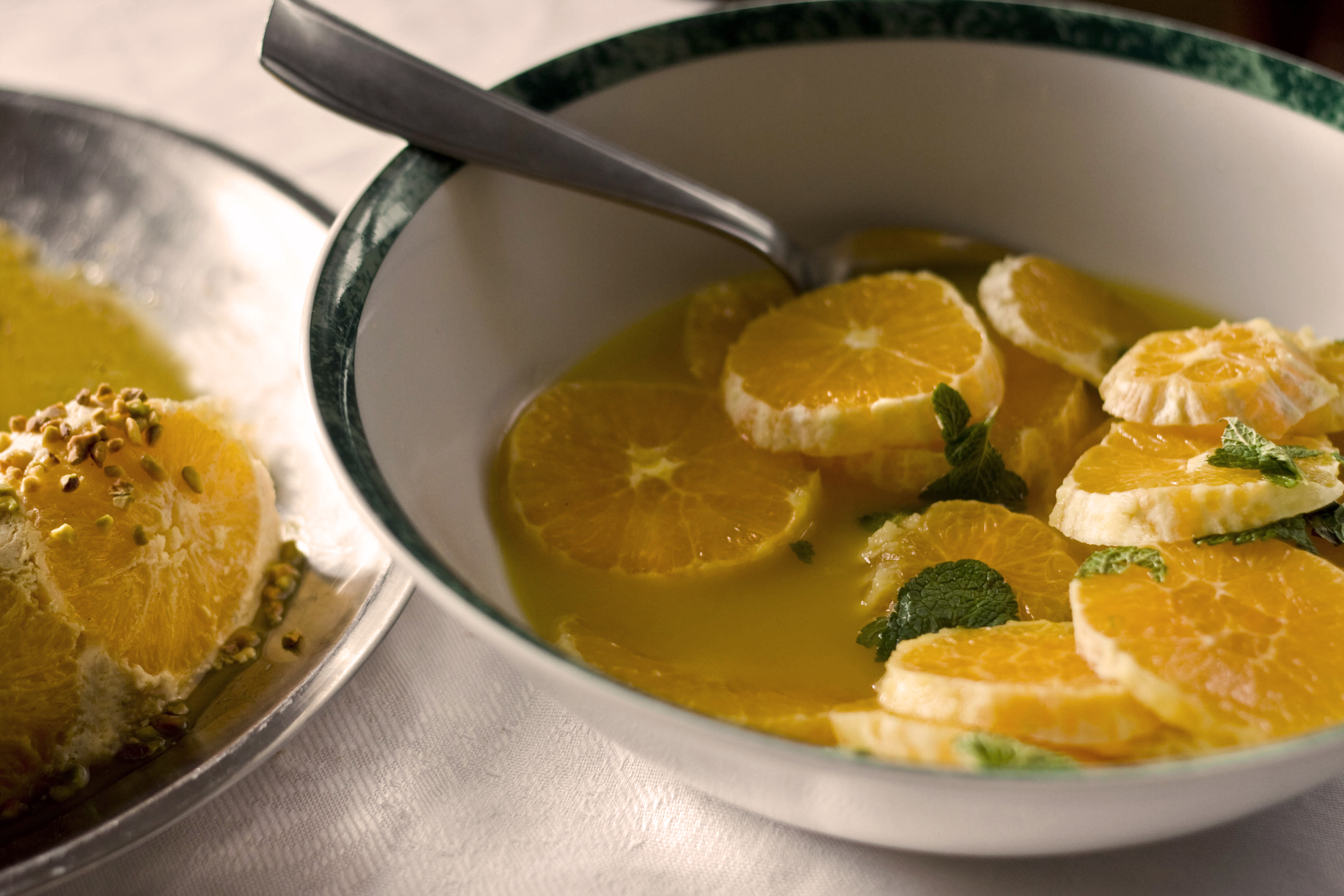
Sweet Baked Vanilla Ricotta with Orange and Pistachio

Serves 8-10 and keeps for over a week refrigerated.
This baked cheesecake is easier to turn out and slice when it is cold, so you can bake it the day before you wish to serve it, slice it when it is cold and then let it come to room temperature. It is best made in a nonstick loaf tin, 25 cm (10 in) long, 5 cm (2 in) wide and 7.5 cm (3 in) deep, or a round, hollow cake tin (as pictured).

You can also substitute the vanilla bean for lemon zest, or add cinnamon and nutmeg to the vanilla version. Use the firmest, freshest ricotta you can find. The pre-packaged product in the supermarket is far inferior to deli-fresh ricotta. If you don’t have the choice, you can use the softer, packaged cheese but strain it for an hour in a fine sieve to reduce the water content. It’s near impossible to find fresh ricotta in France, so I now substitute with a fresh cheese from the south of France called Brousse and I use the low fat (3%) variety.

Ingredients:
3 cups (800 g/1-3/4 lb) fresh ricotta cheese (low fat or regular)
2 free-range eggs
1 vanilla bean pod
4 tbsp agave syrup (or sweetened to taste)
2 oranges (optional for decoration)
Handful of chopped pistachios (optional for serving)

Fresh Orange and Mint Fruit Salad:

4 oranges
3 cups fresh orange juice
½ tsp cinnamon (optional)
½ bunch fresh chopped mint

Directions:
To bake the ricotta, preheat the oven to 150 degrees C (300 degrees F). In a large bowl, whisk together the ricotta and the eggs. Split the vanilla bean and scrape in the seeds. Add the agave syrup.

To decorate the cake, peel 2 whole oranges and remove all rind. Slice the oranges finely and place them around the sides of the tin. Pour the ricotta mixture into the tin and cover with aluminum kitchen foil. Prepare a bain-marie by placing the tin into a slightly larger baking pan and pouring in enough hot water to come about half-way up the side of the tin. Carefully place the baking pan in the oven. Bake the ricotta for 40-60 minutes, until the top is slightly golden and the cake feels firm.

When the ricotta is ready, remove the loaf tin from the bain-marie and remove the foil. Let the ricotta cool, then cover it with plastic wrap and refrigerate. When it is cold you can gently turn it out of the tin and slice it as required.
To make the fresh orange salad, peel 5 whole oranges and cut into round slices. Transfer to a large serving bowl and add orange juice, fresh mint leaves and cinnamon (optional).

Orange and Mint Salad

Orange and Mint Fruit Salad

Recipe: Sugar-free ‘Bananatella’ Chocolate Spread / Pâte à Tartiner

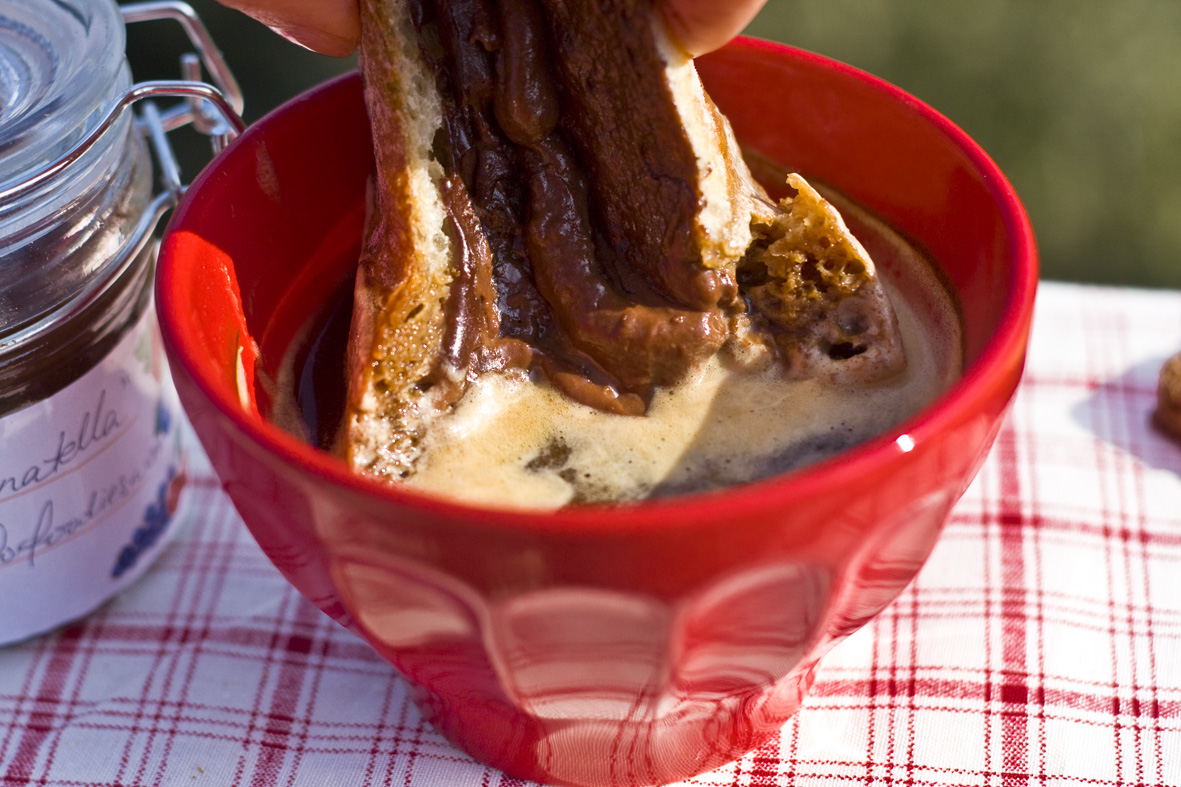
Nutella toast dipped in coffee

Coffee dunking- the French way


Ingredients:

2 overripe bananas
4 tbsp quality cocoa powder
3 tbsp hazelnut oil
2 tbsp skim milk powder
3 tbps hot water
5 tbsp agave syrup
1 tbsp fromage blanc or thick greek yoghurt

Preheat the oven to 150 degrees C. Pierce a small hole the skins of the bananas with a knife and wrap them in foil. Bake slowly till they caramelize in their own juices for approx 1 hour. Once cooled, scoop out the flesh from the skins into a mixing bowl and mash the bananas with a fork. In a small, heavy based saucepan on low heat, combine the hazelnut oil, half the agave syrup and slowly sift in the cocoa powder till combined into a thick paste.

Add the hot water and skim milk powder and whisk. Transfer the chocolate paste and banana to a food processor (or you can use a hand blender in one bowl) and process all the ingredients together on high speed. Add the remaining agave syrup and the fromage blanc. Pour into clean and dry glass jam jar or conserve pot, seal and refrigerate. Keep refrigerated and well sealed after serving. Enjoy!

Dunking toast in coffee

Toasties dipped in chocolate spread

Blue french shutters

The light wasn't quite right the day they painted the left panel ...

Queen of Tarts: Catherine Kluger’s sweet and savoury delights to warm the heart

1 Feb
Queen of Tarts

Queen of Tarts: Tarts to warm your heart @ Tartes Kluger, Paris

God I love a good tart. There’s something about that crumbly, buttery pastry, filled with baked goodness that is ever-so satisfying; and the art of the tart is something the French manage to do so well.

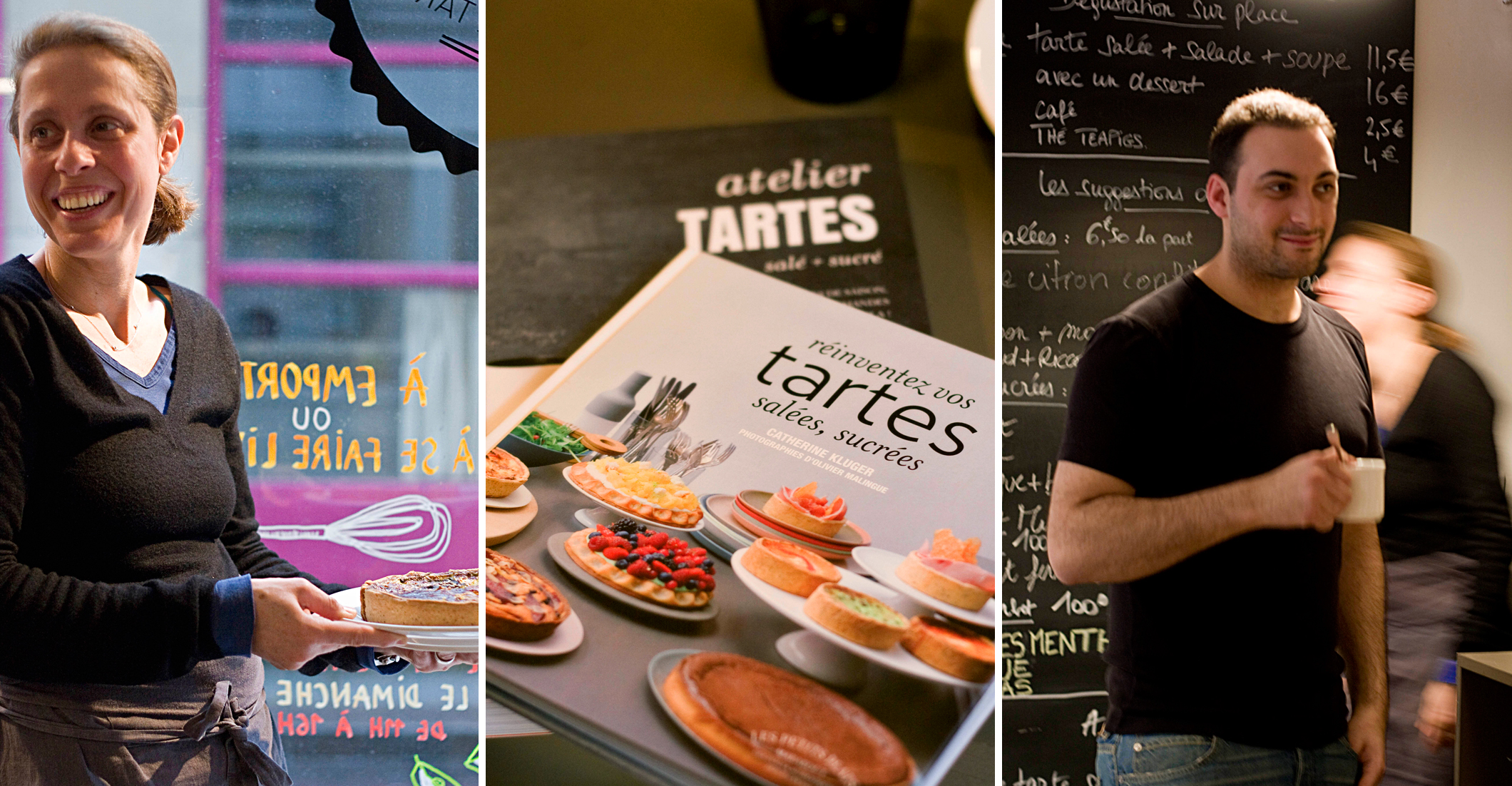
A simple but perfectly baked tart can be the ultimate comfort food, and the perfect pastry base has become the ultimate creative canvas for tart master Catherine Kluger- creator of “Tartes Kluger”, Paris. Kluger- an ex music industry lawyer who loved baking and creating delicious treats for friends and dinner parties, donned the suit and slipped on her apron in 2009 when she opened Tartes Kluger in the vibrant and eclectic Marais district of Paris.

Originally a boulangerie, the space was transformed into this unique atelier des tartes where you can now dine in, take away and even order your tarts online, home delivered and hot on arrival.

la Porte

Follow your nose: heavenly scents waft out of the Tartes Kluger entrance and fill the backstreets of the Marais

Tartes Kluger window

Shopfront window @ Tartes Kluger

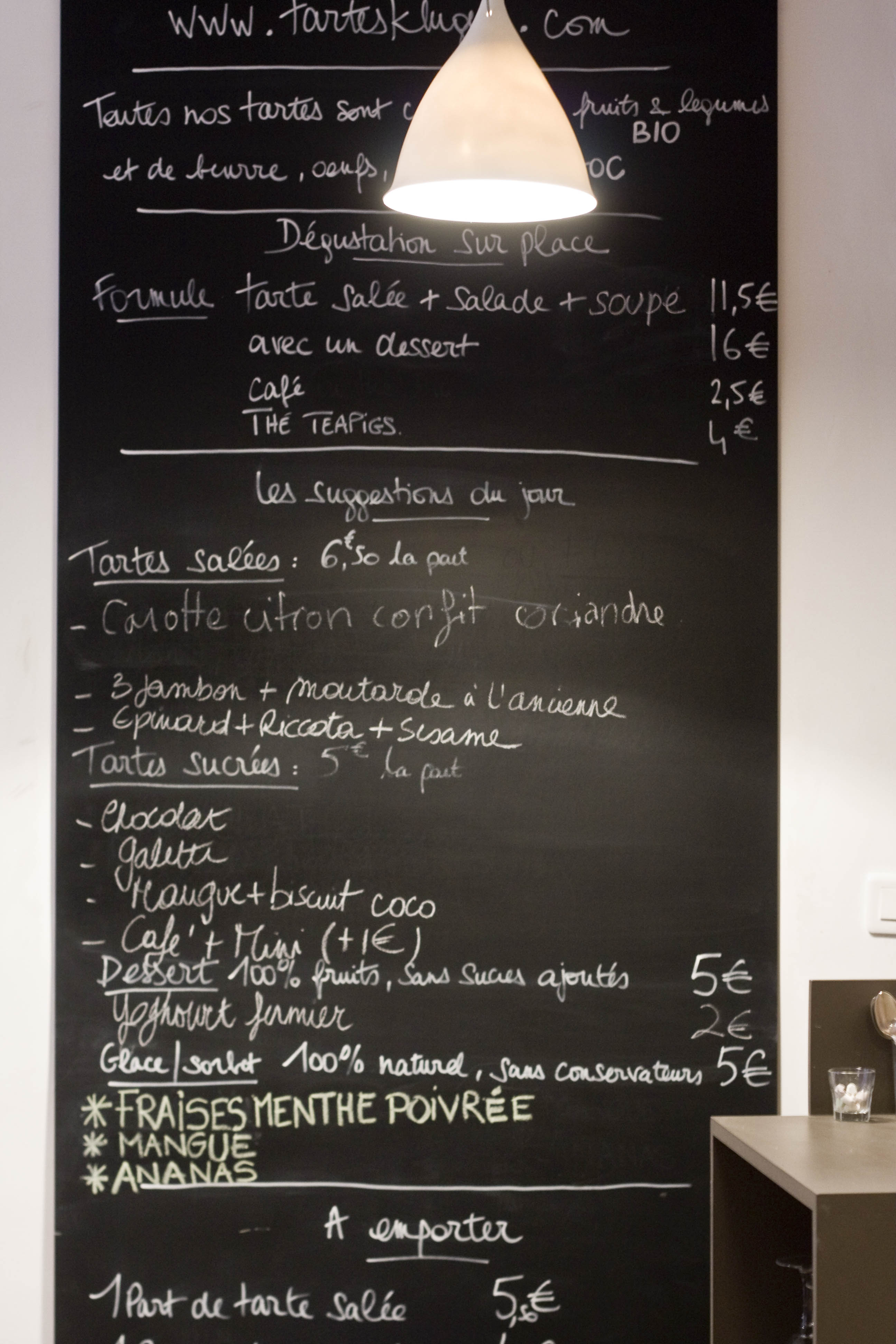
Menu Blackboard

Menu of the day

The extensive range of both sweet and savory tarts is made with seasonal, organic fruit and vegetables, and the eggs, cream and flour are sourced where possible from quality, sustainability certified suppliers and fabricated to respectful ancient methods.

Some of the tarts you can order by the slice or as part of the degustation menu include:

Savoury:
• Thai salmon, zucchini + vermicelli
• Fresh goats cheese, tomato, basil + mint
• Roast pumpkin, chestnut + mushroom
• Curried madras chicken and tomato
• Foie gras, potato + raspberry vinegar
• Green pea, zucchini, rocket + artichoke
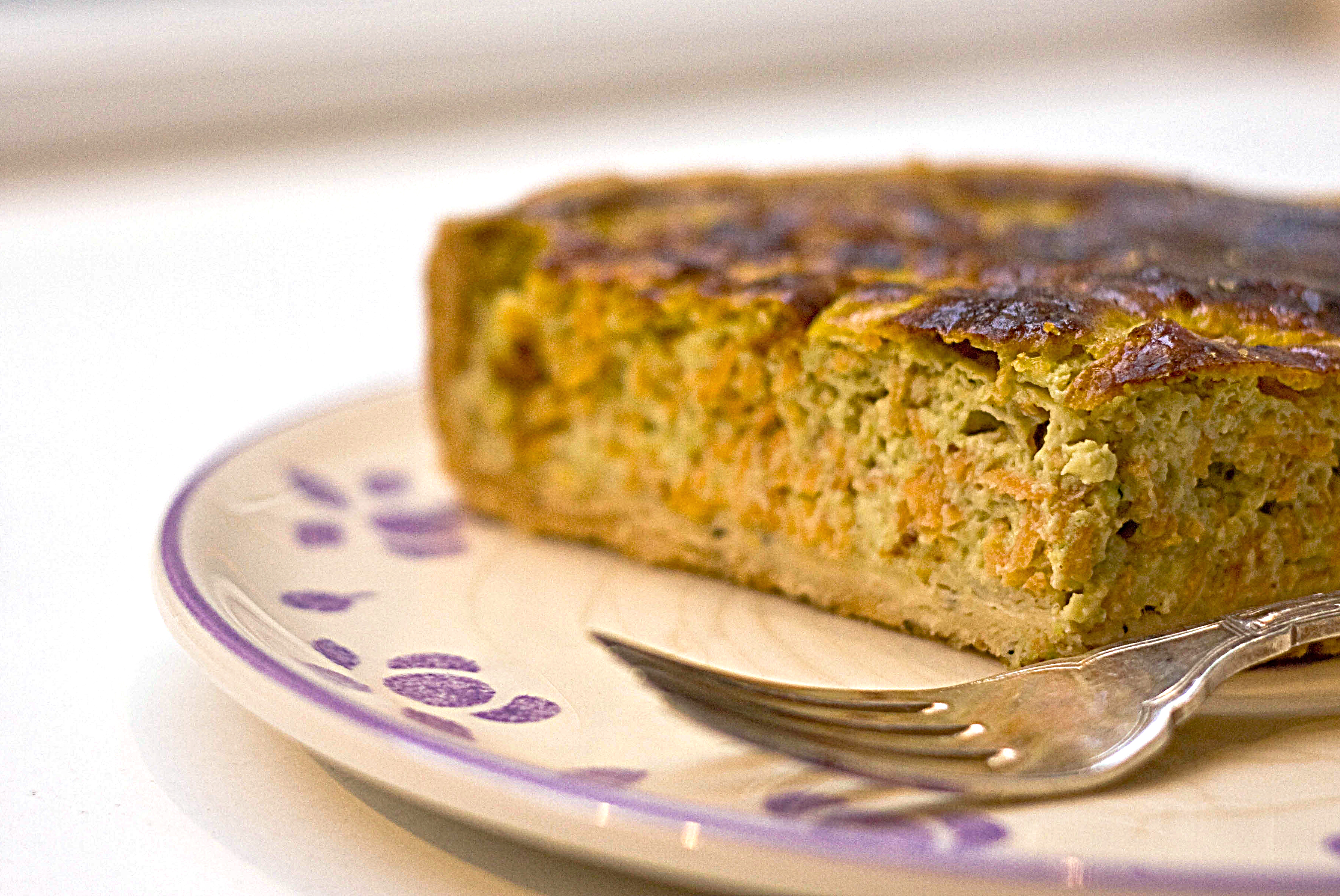
• *Carrot, lemon and coriander pictured (Scroll down for recipe below)

Sweet:
• Orange and cardamom with chantilly ginger cream
• ‘Mont blanc’ style chestnut pavlova pie
• Mango and coconut summer biscuit
• Plum and almond cream
• Passion fruit, hazelnut meringue + lime
• Sweet Ricotta and raspberry

Three pieces of tart

Peace by tart: Spinach, ricotta & sesame, Three-ham & mustard, Carrot, lemon & coriander tarts

Sweet Summer Mango Biscuit Tart

Sweet Summer Mango Biscuit Tart

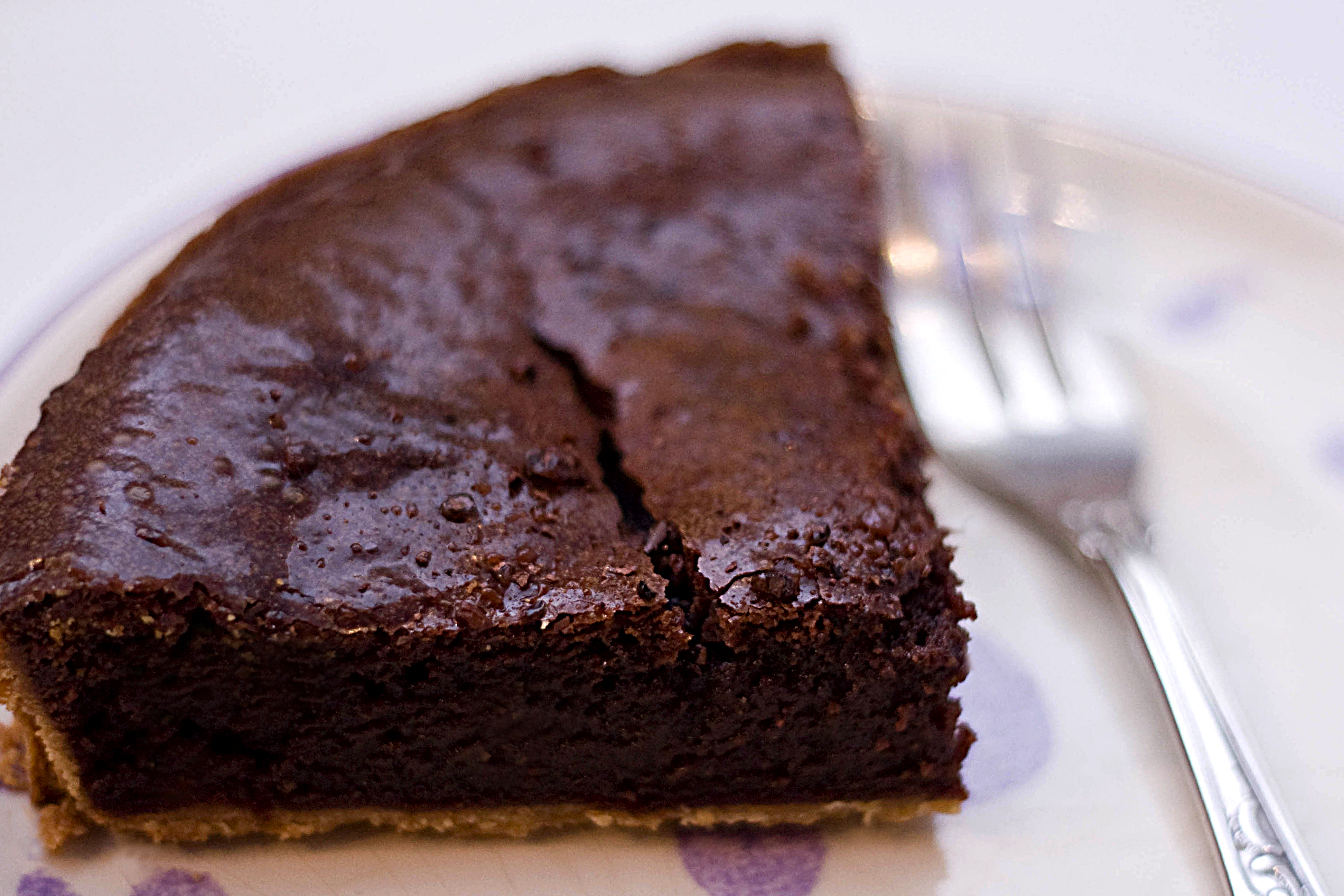
Piece of dark chocolate tart

Tart to warm hearts: The warm dark chocolate tart boasts a crumbly biscuit base and soft, brownie-like centre

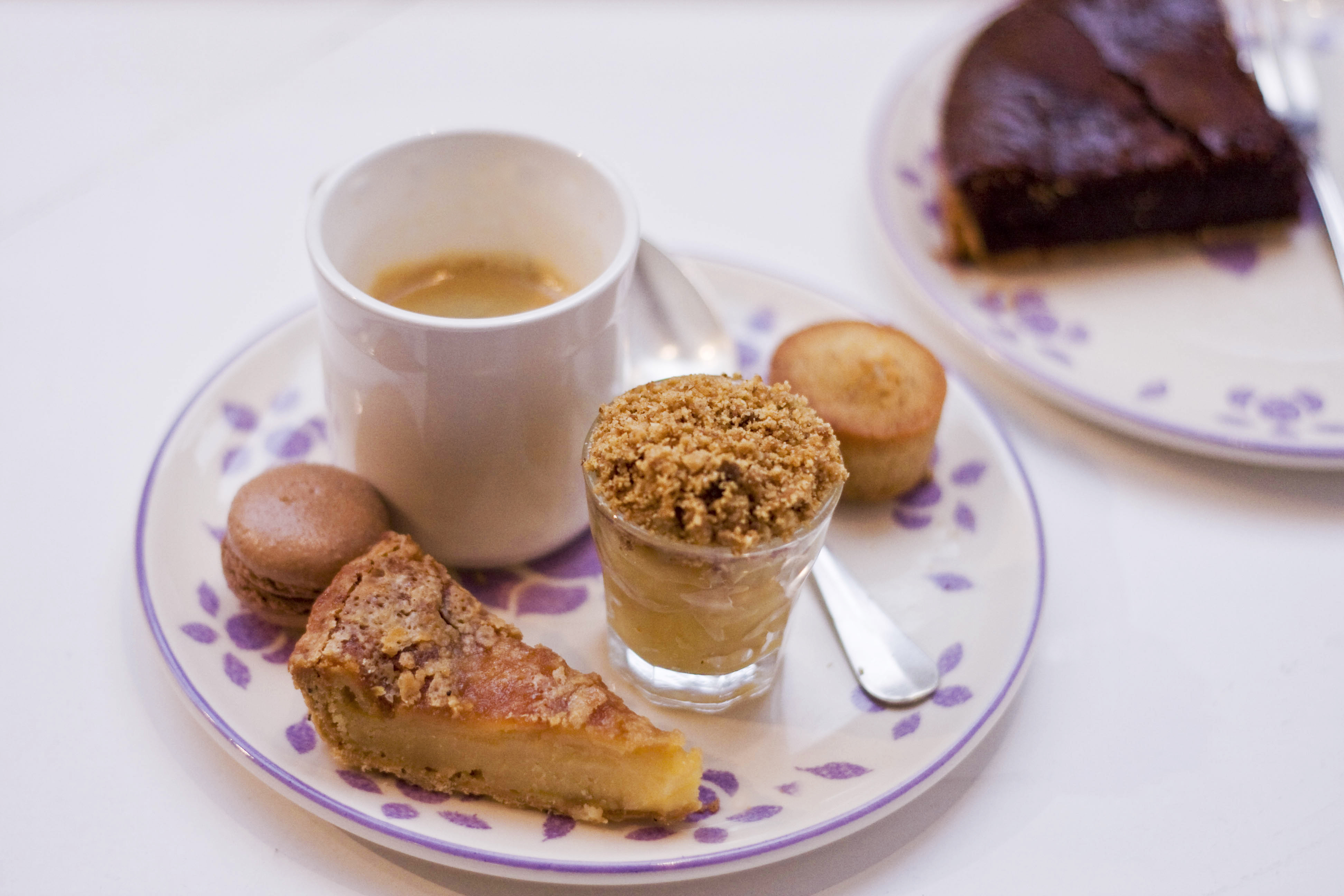
le Cafe Gourmand

Lle Cafe Gourmand chez Tartes Kluger

Tarts_Baking

Behind the scenes @ Tartes Kluger: Tarts fresh out of the oven

Chocolate tart on cooling rack

Freshly baked hot chocolate tart

Mouth watering yet? Mine is, just from writing this!

What I most love about the humble tart is the unlimited variety of delicious combinations you can create, starting only from a well-made sweet or savoury pastry base. You are limited only by your imagination, inspiration and availability of quality, seasonal ingredients.

Let’s see… Carrot, Lemon & Coriander Pie, followed by a Summer Mango & Coconut tart- what better way to make a square meal out of a round dish? Now all you have to do is an afternoon “faire tour” of vintage shops in the fabulous Marais district, and convince yourself that the shopping has burnt off your lunch!

Of course, casually ‘popping into a Parisian tart bakery’ for lunch is not always an option, however baking a homemade tart and sharing the love with your friends and family is a true pleasure of its own. Fortunately, Catherine loves to share her recipes and tart-making tricks of the trade. Her two beautiful and fully illustrated cookbooks are available on Amazon, and her recipes are well sought after for their imaginative flavour pairings, seasonal approach and crowd-pleasing appeal. The Carrot, lemon confit and coriander tart I tasted on my visit was my absolute favorite, so thanks to Catherine, I have translated and am sharing her recipe for this delicious, trans-seasonal savoury tart below.

Catherine Kluger, Recipe Books, The Chef

The queen, her books, her chef

Catherine Kluger Portrait

Catherine Kluger: Queen of Tarts

Do you have a favorite tart recipe? What was the best tart you have ever eaten, and where? Do you have any baking tips for the perfect pastry, or perhaps some gluten free ideas and alternatives to share with the rest of us? Post your ideas and thoughts in the comments box below.

Happy tart making and baking!

Recipe:
Carrot, Lemon Confit & Coriander Tart
Courtesy of Catherine Kluger

Carrot_Lemon_Coriander_Tart

Carrot, Lemon Confit + Coriander Tart: Recipe below

Preparation time: 30 minutes
Resting time: 1 hour
Cooking time: 30 minutes

Ingredients: Tart Pastry

Start the tart by preparing the pastry, and the first step should be preheating the oven to 200ºC/400ºF
This pastry recipe makes one 9-inch (23 cm) tart shell and is sourced from VEGETARIAN COOKING FOR EVERYONE by Deborah Madison, as quoted on gourmet.com

A fail-proof French–style crust for lining those French tart pans with a removable bottom. Because the dough is so short, it’s virtually impossible to overwork it.

• 1 cup plus 2 tablespoons organic plain flour
• 1/4 teaspoon salt
• 1 tablespoon sugar
• 1/2 cup butter at room temperature, cut into small pieces
• 3 tablespoons water
• 1 tablespoon poppy seeds or cumin

Instructions: Tart Pastry

Stir the flour, salt, and sugar together in a bowl, then work in the butter with two knives, your fingers, or a mixer until it makes fine crumbs without becoming completely smooth. Stir in enough water to pull the dough together. Wrap in plastic wrap and let rest in the refrigerator for 15 minutes.

To line the pan, roll the dough out into a 9-inch circle then set it in the pan. Using the heel of your palm, press the dough up the side. If some pieces are too long, break them off and add them, as needed, to areas that are too short. The sides should be about ¼ inch thick, rise ¼ inch above the rim, and be slightly thinner at the base of the pan. This way, when the dough slumps during the baking, this shallow space will be filled evenly instead of being overly thick and under-baked. Carefully set the tart shell in the freezer to harden.

Tart shells are nearly always pre-baked before filling. To pre-bake a tart shell, preheat the oven to 200 degrees celcius/400ºF. “Blindbake” the pastry shell by lining pastry over with baking paper, then filling the tart tin with dry rice or legumes such as beans or lentils which will weigh down the based and stop it from swelling. Bake until set and lightly browned, about 25 minutes. Check it several times for swells and prick any large bubbles with the tip of a knife.

Ingredients: Tart filling

• 300 ml milk
• 100 ml pouring cream
• 3 whole eggs
• Salt and pepper to taste
• 200 g carrots
• 30 g lemon confit (preserved lemon)
• ½ bunch fresh coriander

Instructions: Tart preparation

Preheat the oven to 160 degrees C.

Peel carrots and cut into very thin strips or shred with a processor into long and thin noodle-like shreds.
‘Sweat’ the carrots to remove their water content by resting the carrot shreds in a colander mixed approximately 2 tsp of course sea salt. Leave to rest for one hour then ‘pat dry’ using a tea-towel to remove excess water and salt.

Take the pre-baked pastry dish arrange the shredded carrot at the bottom of the dish as evenly and vertically as possible, trying to make them ‘stand upright’ rather than lie flat on the bottom of dish, to fill the volume of the tin.

Rinse confit lemon, dry with paper towel and dice until it’s finely minced. Chop the coriander leaves finely and spread the coriander and lemon evenly over the carrot.

Prepare the liquid ingredients by mixing the eggs, milk, cream, salt and pepper together in a bowl.
Pour the liquid over the top of the carrots etc up to the height of the edge of the pastry. Decorate the top with coriander and cracked black pepper. Bake for 30 minutes. Remove from the oven and allow it to cool for 20 minutes whilst you drink a glass of champagne and call your friends and family to the table.

Bon Appétit!

Tartes Kluger can be found at 6 Rue du Forez in the Marais (3rd) arrondissement of Paris
Metro: Temple, Filles du Calvaire
Ph: +33 (0)1 53 01 53 53
www.tarteskluger.com